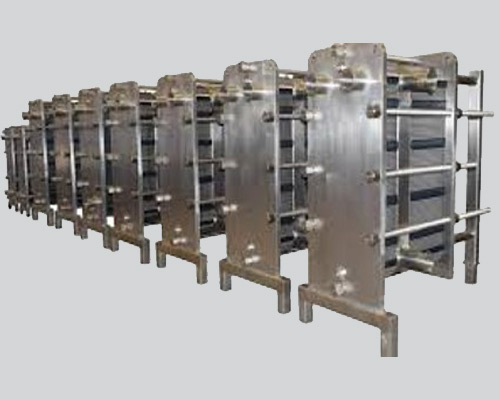
Key Features of Multi-Section Plate Heat Exchangers (Pasteurizers):
- Hygienic Design: These pasteurizers are designed to meet stringent hygiene standards, making them suitable for applications in the food, dairy, and pharmaceutical industries. The surfaces in contact with the product are typically made of food-grade materials like stainless steel.
- Multiple Sections: The pasteurizers consist of multiple sections or stages, each with its own set of plates. This allows for precise control over the temperature profile of the product as it passes through the heat exchanger.
- Efficient Heat Transfer: Similar to standard plate heat exchangers, pasteurizers utilize corrugated plates to maximize the heat transfer surface area. This ensures efficient thermal treatment of the product.
- Regulatory Compliance: Pasteurizers are designed to comply with industry regulations and standards related to food safety and quality, such as HACCP (Hazard Analysis and Critical Control Points) and FDA (U.S. Food and Drug Administration) guidelines.
- Temperature Control: The design of pasteurizers allows for accurate temperature control, ensuring that the product is heated to a specific temperature for a set period of time, effectively eliminating or reducing harmful microorganisms.
Advantages of Multi-Section Plate Heat Exchangers (Pasteurizers):
- High Efficiency: They offer efficient heat transfer, minimizing energy consumption during the pasteurization process.
- Flexibility: Multi-section pasteurizers can be customized to accommodate various flow rates, temperatures, and product viscosities.
- Reduced Processing Time: The precise temperature control allows for shorter processing times, preserving the quality of the product.
- Easy Maintenance: The modular design of plate heat exchangers facilitates easy disassembly and cleaning, ensuring compliance with hygiene standards.
- Cost-Effective: Pasteurizers are a cost-effective solution for thermal treatment processes compared to other methods like batch pasteurization.
Overall, multi-section plate heat exchangers, commonly known as pasteurizers, play a vital role in ensuring the safety, quality, and extended shelf life of a wide range of liquid products in industries where hygiene and precision are of paramount importance.