Brazed plate heat exchangers are compact and efficient devices used for transferring heat between two fluids. They are constructed by stacking multiple thin plates, typically made of stainless steel or other high-quality alloys, and brazing them together with copper or nickel to form a single, solid unit. This brazing process creates a durable and leak-proof seal between the plates.

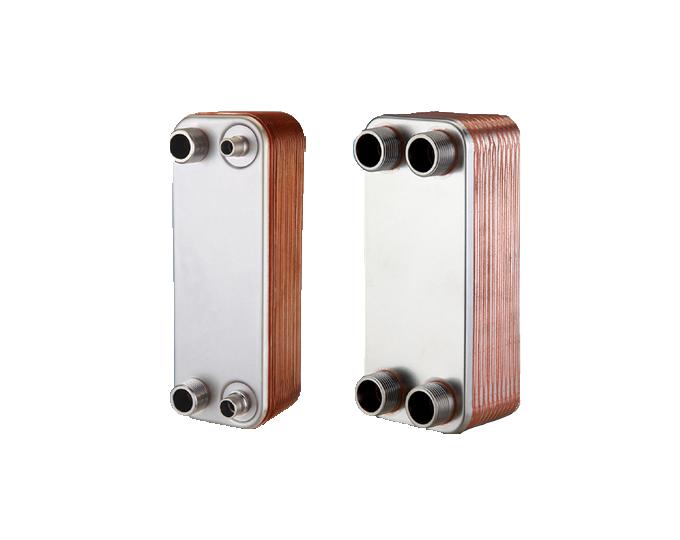
Key Features of Brazed Plate Heat Exchangers:

  1. High Thermal Efficiency: The design of brazed plate heat exchangers maximizes the surface area available for heat transfer, resulting in highly efficient performance.
  2. Compact Design: They are notably compact compared to other types of heat exchangers, making them ideal for installations with limited space.
  3. Low-Pressure Drop: Brazed plate heat exchangers typically have low flow resistance, which minimizes pressure drop across the exchanger, leading to energy savings.
  4. Durable and Leak-Proof: The brazing process creates a strong and secure connection between the plates, making the heat exchanger highly resistant to leaks, even under high pressures and temperatures.
  5. Wide Range of Applications: Brazed plate heat exchangers are suitable for a variety of applications, including HVAC systems, refrigeration, process heating and cooling, and domestic hot water production.

Advantages of Brazed Plate Heat Exchangers:

  1. Efficient Heat Transfer: The corrugated plate design promotes turbulent flow, which enhances heat transfer efficiency.
  2. High Thermal Performance: They can achieve high-temperature differentials, allowing for effective heat exchange even in demanding applications.
  3. Low Maintenance: Brazed plate heat exchangers have fewer components compared to gasket designs, reducing the likelihood of maintenance issues.
  4. Resistant to Thermal Stress: The brazed joints provide structural integrity, allowing the heat exchanger to withstand thermal expansion and contraction without compromising performance.
  5. Cost-Effective: They are often more cost-effective compared to other types of heat exchangers, especially in applications where space is limited.

Applications of Brazed Plate Heat Exchangers:

  1. Heating, Ventilation, and Air Conditioning (HVAC): They are used for heat recovery, domestic hot water production, and radiant floor heating in buildings.
  2. Refrigeration: Brazed plate heat exchangers are commonly used in refrigeration systems for evaporators and condensers.
  3. Industrial Processes: They play a crucial role in various industrial applications, including oil and gas processing, chemical manufacturing, and food processing.
  4. District Heating and Cooling: They are employed in district energy systems for transferring heat between a central plant and multiple buildings.
  5. Solar Thermal Systems: Brazed plate heat exchangers are used in solar hot water systems to transfer heat from solar collectors to storage tanks.

Overall, brazed plate heat exchangers offer a combination of efficiency, durability, and space-saving design, making them a popular choice for a wide range of heating, cooling, and industrial applications. Their ability to handle high temperatures and pressures, along with their compact size, makes them a versatile and cost-effective solution for many industries.